The Difference Between Sadaqah and Sadaqah Jariyah
Latest News

The Difference Between Sadaqah and Sadaqah Jariyah

Learn the difference between Sadaqah and Sadaqah Jariyah, understanding how each form of charity works and the impact they create over time.

Understanding Two Kinds of Charity

Islam encourages giving charity in many forms. You may have heard the terms “Sadaqah” and “Sadaqah Jariyah” are used and wondered how they differ. Simply put, Sadaqah refers to any voluntary charity given to please Allah; this can be money, food, kindness, or any act of generosity. Sadaqah Jariyah specifically refers to an ongoing or continuous charity, a subset of Sadaqah that continues to deliver benefits over time.

Think of Sadaqah as a broad category of all good deeds done charitably, while Sadaqah Jariyah is a special type within that category, focused on long-term impact. For instance, donating a blanket to someone in winter is Sadaqah (you’ve helped them in that moment). Donating towards building a shelter or home that will serve people for years is Sadaqah Jariyah (you’ve set up something that will help in the long term).

Both concepts come from the Islamic ethos of compassion and support for others. However, they operate on different time scales. Let’s break down the differences in more detail:
بِسْمِ ٱللَّهِ ٱلرَّحْمَٰنِ ٱلرَّحِيمِ

“The example of those who spend their wealth in the way of Allah is like a seed that sprouts into seven ears, each bearing one hundred grains.”

1. Duration of Impact

Sadaqah (General Charity): Usually has an immediate or short-term impact. The benefit

might be one-off or temporary. For example, giving a meal, paying someone’s medical bill, or even smiling at someone (yes, even a smile is Sadaqah!) are all instances of charity that occur and finish in that moment.

Sadaqah Jariyah (Continuous Charity): Has a long-term impact. The initial act creates a

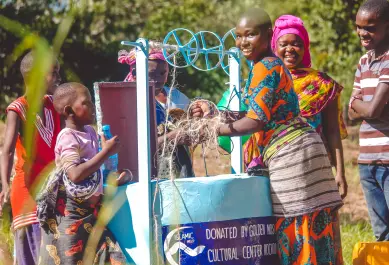
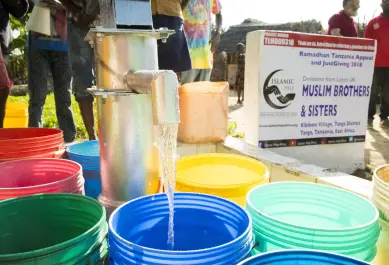
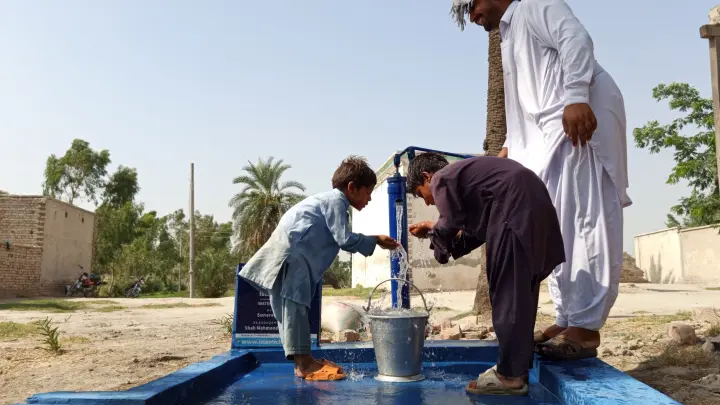
benefit that repeats or persists. Once set in motion, it continues to provide relief or goodness without the donor having to do anything new. A classic example is digging a well: you dig it once, but it provides water for many years and to many people.

2. Examples

Examples of Sadaqah: Feeding a poor family for a night, donating clothes, helping a neighbour, giving someone a ride, planting a tree for the environment, or even intangible acts like praying for someone or teaching your child good manners. These are generally immediate acts of kindness or support. They might not last beyond that instance (the food gets eaten, the ride is over, the lesson is taught once).

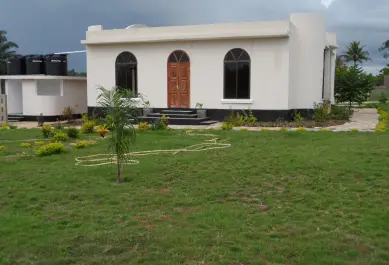
Examples of Sadaqah Jariyah: Building a mosque, funding a clinic or school, sponsoring the construction of wells or boreholes, creating a free library, publishing beneficial books, supporting an orphan’s education in a way that equips them for life. These things continue to give benefits repeatedly. As an example, every prayer in that mosque you built or every child who studies in that school contributes to your ongoing reward.

A helpful way to think of it is: Sadaqah Jariyah projects are often infrastructure or knowledge-based – they lay a foundation that people can use over and over. Regular Sadaqah can be any kind of help, usually consumed or completed once.

Eco Mosque Tanzania (12)
IMG_8082
IMG_20220725_113634_1
lslamic Help (1 of 1)-3
Tanzania Water (6)

3. Reward Structure in Islam

Reward for Sadaqah: The Prophet (pbuh) said, “charity extinguishes sin as water extinguishes fire”, – highlighting that any charity can erase sins and earn Allah’s pleasure. There’s a great reward for every act of Sadaqah, big or small. These rewards are recorded instantly for the believer. However, once the act is done, the opportunity for that specific act’s reward generally does not continue (except that it remains in one’s record of good deeds permanently). For example, if you give £5 to someone today, you get the reward for that £5 charity today.


Reward for Sadaqah Jariyah: This is where Sadaqah Jariyah stands out – its reward continues to accumulate over time. As we learned on the Sadaqah Jariyah overview page, a person can earn rewards even after death from Sadaqah Jariyah they set up in their lifetime. Every time someone benefits from your ongoing charity, it’s as if you gave that charity anew, and you get a reward anew. 

So, using the previous example, if you invested £5 in planting a fruit tree as

Sadaqah Jariyah, you get a reward not just when you planted it, but every season that people (or animals) eat from it or take shade under it. Ten years from now, if that tree still feeds people, you’re still earning blessings by the will of Allah. The hadith confirm this exponential reward system: deeds that continue are explicitly mentioned as benefiting a believer after death.

In essence, Sadaqah Jariyah is like a trust fund of good deeds that keeps paying dividends.

4. Obligation and Timing

Neither Sadaqah nor Sadaqah Jariyah is obligatory (unlike Zakat, which is mandatory charity for those who qualify). They are voluntary, coming purely from one’s generosity and desire to seek Allah’s pleasure.

Sadaqah can be given at any time, often spontaneously, such as when you see someone hungry and buy them a meal on the spot. 

Sadaqah Jariyah often involves planning or joining a larger initiative, e.g. deciding to raise funds for a well or teaming up with a charity to build a classroom. It might not be as spur-of-the-moment, because it usually requires identifying a project with lasting effects.

However, one can also form the intention spontaneously to turn a regular act into a Sadaqah Jariyah. For example, if you suddenly decide, “I’m going to donate a Quran to the mosque as waqf (endowment),” that’s a quick action but also a continuous charity because every reader of that Quran is benefiting.

5. Interrelation

It’s important to note that all Sadaqah is virtuous – one is not “better” in a moral sense than the other since they both please Allah. In fact, Sadaqah Jariyah is a type of Sadaqah, so they aren’t mutually exclusive categories. Instead, think of it this way: As a Muslim, you are encouraged to give Sadaqah regularly in various ways and whenever possible, establish a Sadaqah Jariyah. The continuous charity might require more resources or thought, but even if it’s small, it’s wise to have at least one such deed in your portfolio of good works.

For example, you might give a bit of money daily in a donation box (that’s regular Sadaqah), and concurrently contribute monthly to a well project (that’s Sadaqah Jariyah). The daily charity helps someone immediately, the well will help many in the near and far future; both are beloved in Islam. The Prophet (PBUH) and his companions were known to give spontaneous charity often, and they also set up lasting charities (such as Uthman ibn Affan (ra), who bought a well in Medina so the public could have free water, a classic case of Sadaqah Jariyah still earning him reward).

Which Should You Focus On?

In practical terms, Muslims shouldn’t see this as an either/or choice. If you have the means, do both. If your means are limited, do what you can regularly (even if small) and save or plan for a long-term project when possible. For instance, a person of modest income might give a few pounds in Sadaqah every week and once a year try to fund something continuous, like a share in building a well or donating a piece of equipment to a clinic.

Spiritually, remember that the intention matters. If you give even a one-time Sadaqah with the hope that it has lasting benefit, Allah can still reward it as such. Conversely, when you embark on a Sadaqah Jariyah, make the intention that it’s for Allah’s sake and that you want it to benefit as many as possible; this sincerity will maximise the reward.

In summary, the difference between Sadaqah and Sadaqah Jariyah comes down to immediacy vs. continuity. Both are charities, but Sadaqah Jariyah is like planting a seed that will keep growing. We can incorporate both forms in our lives. Understanding this distinction helps ensure we intentionally create some deeds that “keep on giving.” This way, we balance responding to urgent needs now (through regular charity) with investing in the future (through ongoing charity).

FAQs:

  • Q: Is Sadaqah Jariyah “better” than normal Sadaqah?
    A: Both are greatly rewarded and encouraged. Sadaqah Jariyah isn’t “better” in the sense of replacing regular charity, but it offers additional benefits (continuing reward). A wise approach is to engage in regular Sadaqah frequently and also do Sadaqah Jariyah when you can. Each has its place, one addresses immediate needs, the other builds a lasting legacy.
  • Q: Can an act be both Sadaqah and Sadaqah Jariyah at the same time?
    A: Yes, any Sadaqah Jariyah is by definition also Sadaqah (charity). For example, donating a wheelchair to a hospital is Sadaqah (you gave charity) and Sadaqah Jariyah (as long as patients use that wheelchair, it’s ongoing charity). In contrast, not all Sadaqah is Jariyah. If you gave someone a meal, it’s just regular Sadaqah because the benefit doesn’t persist after it’s eaten.
  • Q: Does Sadaqah Jariyah have to be something physical, like a building?
    A: Not necessarily. Many Sadaqah Jariyah are physical projects, but they can also be non-physical tangible. For instance, funding a doctor’s training can be Sadaqah Jariyah; the knowledge and skills the doctor uses to save lives for decades are an ongoing charity for the one who helped educate them. Similarly, digital projects (such as a free educational app or website) that provide continuous benefits also count. The key is ongoing benefit, whether physical or not.

updates that matter

Empower my Inbox

Volunteer

Vivamus lacinia lacus vel neque egestas, vitae volutpat purus dapibus. Nullam nec ultricies erat. Etiam ac urna metus.

    Updates that matter

    Join our mailing list for events, urgent appeals, and project updates from the communities you help empower.

      We use cookies to make your visit even better

      They help us understand how our website is used so we can improve your experience and share the stories and projects you care about most. All data is anonymous, and your privacy matters to us.
      We use cookies to make your visit even better