Sadaqah Jariyah in the Qur’an and Hadith
Latest News

Sadaqah Jariyah in the Qur’an and Hadith

Explore Sadaqah Jariyah through Qur’an and Hadith, understanding its spiritual significance, lasting rewards, and how ongoing charity benefits both donors and communities.

Introduction: The Divine Emphasis on Lasting Charity

To fully appreciate Sadaqah Jariyah, it’s helpful to trace its roots in the primary Islamic sources: the Qur’an (the word of Allah) and the Hadith (teachings of the Prophet Muhammad (PBUH)). While the term “Sadaqah Jariyah” (continuous charity) is derived from Hadith literature and early Islamic scholarship, the concept of ongoing charity is deeply embedded in Islamic teachings. In this article, we’ll explore some key Qur’anic verses and hadiths that shed light on the virtue of charitable deeds whose benefits outlive the donor. These references not only underscore the merit of Sadaqah Jariyah but also inspire us to find ways to make our charities long-lasting.

بِسْمِ ٱللَّهِ ٱلرَّحْمَٰنِ ٱلرَّحِيمِ

“The example of those who spend their wealth in the way of Allah is like a seed that sprouts into seven ears, each bearing one hundred grains.”

Sadaqah Jariyah in the Qur’an

The Qur’an encourages generosity and often alludes to the multiplied rewards of those who give for the sake of Allah. While it doesn’t use the term “Sadaqah Jariyah” explicitly, several verses lay the foundation for the idea of continuous rewards for charity:

Surah Al-Baqarah 2:261: “The example of those who spend their wealth in the way of Allah is like a seed [of grain] which grows seven spikes; in each spike is a hundred grains. And Allah multiplies [His reward] for whom He wills.”

 This verse beautifully illustrates exponential growth from a single act of charity. One seed yields 700 grains, a 700x return! While all charity can be rewarded manifold, scholars often interpret this verse as referring to ongoing impact: a small charitable deed can yield abundant benefits and rewards. Sadaqah Jariyah is a practical way we see this manifested: you invest in one project (one seed), and it yields benefit repeatedly (many grains). This Quranic promise should motivate us to seek charities that have a far-reaching impact.

Surah Al-Baqarah 2:274: “Those who spend their wealth [in Allah’s cause] by night and by day, secretly and publicly, they will have their reward with their Lord. No fear will there be concerning them, nor will they grieve.” This verse praises consistent charity under all circumstances. While not limited to Sadaqah Jariyah, one can reflect that giving “by night and by day” implies regular, perhaps even ongoing, charity. The reward is assured by Allah, providing comfort that charitable folks need not fear or grieve. It aligns with the idea that if you set up a form of charity that continues day and night (like a waqf or endowment), you fall under this glad tidings.

Surah An-Nisa 4:79: (paraphrased) teaches that whatever good reaches us is from Allah. One interpretation is that if you initiate a good deed that continues, any subsequent good that flows from it is also from Allah’s grace and recorded for you. While not a direct mention, it resonates with the hadith concept that one who starts a good practice gets a reward every time it’s acted upon by others (we’ll see a hadith on this later).

Surah Yasin 36:12: “Indeed, We record that which they have put forward and their traces [i.e., what they leave behind].” This verse is often cited to show that what we leave behind (our legacy, including ongoing charities and knowledge) is recorded by Allah. The word “ آثارهم (atharahum)” means “traces” or “effects” people leave after them. Continuous charity is precisely such a positive trace that remains after one’s life, and Allah promises it’s not lost or ignored – it’s written in our favour.

Additionally, the Quran frequently encourages helping others, feeding the poor, assisting orphans, etc., and although each instance may refer to immediate charity, Muslims extrapolate that doing so in a way that has lasting results is even more encouraged.

Qur’an and Charity Summary:

The Qur’anic ethos is straightforward – give freely, and Allah will multiply the reward tremendously and perhaps invisibly (like seeds growing underground). While not spelling out “build a well for ongoing reward,” the verses above and others provide the spiritual incentive that fuels Sadaqah Jariyah efforts.

Image Style 03 _ 3_2 (Scroll cards)-2 (1)
image (1) (1)
Placeholder (1)
Media Cards (5)
Image (2)

Sadaqah Jariyah in Hadith

The Hadith literature is where the term Sadaqah Jariyah is directly mentioned and explained. There are several hadiths that either explicitly talk about continuous charity or imply ongoing reward for certain deeds:

The Famous “Three Deeds” Hadith: “When a man dies, his deeds come to an end except for three: Sadaqah Jariyah (a continuous charity), knowledge which is beneficial, or a virtuous descendant who prays for him.” (Sahih Muslim). This hadith is the cornerstone for understanding Sadaqah Jariyah. It clearly lists sadaqah jariyah as one of the three things that keep a believer earning rewards after death. It also hints at examples: beneficial knowledge and a righteous child’s prayers can themselves be forms of ongoing benefit (knowledge might be spread via teaching or books; a child’s piety is often a result of the parent’s upbringing – an ongoing influence). For our topic, it straightforwardly establishes that continuous charity is not just a nice-to-do but truly impactful for one’s hereafter.

Hadith on Actions that Continue to Benefit:

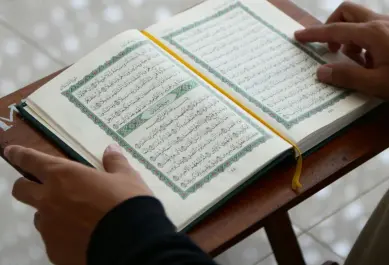
There is a report from Abu Hurairah (ra) that Prophet Muhammad (PBUH) said: “Among the good deeds that will reach a believer after his death are: knowledge he taught and spread; a righteous child he leaves behind; a copy of the Quran he left as inheritance; a mosque he built; a house he built for travelers; a canal he dug; or charity he gave from his wealth in his health and life – it will reach him after death.” (Reported in Ibn Majah and others). This narration expands on the concept with concrete examples closely aligned with Sadaqah Jariyah, such as building mosques, houses for wayfarers, digging canals (water projects), leaving Qur’ans, etc. It’s essentially describing a variety of Sadaqah Jariyah deeds.

Hadith on Starting a Good Sunnah:

 “Whoever starts a good practice (sunnah hasanah) in Islam will get its reward and the reward of all those who practice it until the Day of Judgment, without diminishing their reward in the slightest…” (Sahih Muslim). Although this isn’t specifically about charity, it does imply ongoing rewards for initiating something beneficial that others continue. For instance, if you start a charitable initiative that others carry on after you, you share in all their rewards. Many scholars cite this when encouraging endowments or community initiatives, by starting a charity project, you’re in effect creating a chain of good that might continue after you, crediting you each time someone benefits or contributes.

Charity doesn’t Decrease Wealth:

This famous hadith states, “Charity does not decrease wealth.” (Sahih Muslim). While this addresses the donor’s attitude (don’t fear giving, your wealth will be blessed), it also rings true for Sadaqah Jariyah in a spiritual sense: you might think giving away a considerable amount to build a well means you “lost” that money, but in reality, it’s like you deposited it in an akhirah investment account that only grows. You haven’t decreased your wealth; you’ve transferred it to a form that yields eternal profit.

Treat Your Sick with Charity:

 “Treat your sick by giving Sadaqah.” (Authentically attributed to the Prophet (PBUH) in various collections). This implies that charity has an ongoing effect, such as warding off calamities or easing illness. It’s often interpreted broadly, but some understand that continuous charity on someone’s behalf can continuously bring about well-being, by Allah’s permission.

Rewards for Planting Trees:

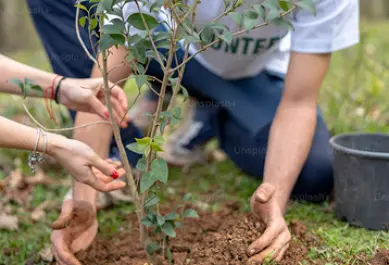
The Prophet (PBUH) said: “If a Muslim plants a tree or sows seeds, and then a bird, or a person, or an animal eats from it, it is regarded as a charity (sadaqah) for him.” (Sahih Bukhari, Sahih Muslim). This hadith, though it does not use the word “jariyah,” exemplifies the spirit of ongoing charity. A one-time act of planting results in repeated acts of charity as creatures benefit repeatedly. It closely parallels the ideas of Sadaqah Jariyah, encouraging environmental charity with lasting impact.

Insights from Scholars on Sadaqah Jariyah

Early Islamic scholars, such as Imam An-Nawawi, commented on these hadiths, clarifying that Sadaqah Jariyah essentially refers to waqf (permanent endowment). For example, if someone endows a property for charity, the property itself isn’t consumed; it continues to generate benefits or revenue that are used for good. This is the mechanism by which many Sadaqah Jariyah projects were historically carried out (wells, schools, etc., were often set up as waqf).

Scholars also note that even small ongoing charities count. For instance, Al-Nawawi mentioned that if one can’t afford a waqf, even lending something in good condition that many people use can count (like a public copy of the Quran). It’s the concept of continuity that defines it.

They also caution, however, that not every charity we give automatically becomes “jariyah.” For example, feeding people at a one-time event is huge in reward, but once the food is gone, it’s over, which is fine (it’s normal Sadaqah). Sadaqah Jariyah specifically refers to charity that inherently has a lasting benefit. This distinction helps us plan our charitable portfolios more effectively, ensuring we include some long-term strategies.

Conclusion: A Holistic Understanding

By looking at the Qur’an and Hadith together, we see that Islam not only encourages charity in general but also provides a blueprint for long-term thinking. The Quran instils the mindset of expecting multiplied outcomes from what we give, and the Hadith provides tangible examples and assurance that these outcomes (such as knowledge spreading, wells flowing, etc.) will continue to count for us beyond our lifetimes.

For a Muslim wanting to practice this, the scriptural basis serves as both encouragement and guidance. For instance: – When you invest in a Sadaqah Jariyah project, recall Quran 2:261 and have faith that Allah will amplify its impact. – When you wonder if the effort of building something lasting is worth it, recall the hadith that nothing will help you after death except things like this. – If you worry about spending a big amount on a long-term project, recall “charity doesn’t decrease wealth” and give with trust in Allah.

Sadaqah Jariyah is thus not a modern idea or a charity campaign buzzword; it’s rooted in the earliest Islamic teachings. It encapsulates the Islamic vision of charity that is not only reactive but also proactive and foresighted. By aligning our giving with these teachings, we follow a path trod by the Prophet (PBUH) and his companions, one in which our charity becomes a sadaqah that keeps on giving, by divine promise.

FAQs:

  • Q: Where does the term “Sadaqah Jariyah” come from?
    A: It’s an Arabic term; “Sadaqah” means charity, and “Jariyah” means flowing or ongoing. The phrase is directly taken from a hadith. The Prophet (PBUH) used the term when he said “Sadaqah Jariyah” as one of the deeds that continue after death. Early scholars like Imam Nawawi explained that it essentially means an endowment or anything whose benefit continues to flow. So, it’s a term from Islamic tradition rooted in Prophetic sayings.
  • Q: Are there specific Quran verses about Sadaqah Jariyah by name?
    A: The Qur’an doesn’t use the exact term “Sadaqah Jariyah,” but it repeatedly encourages charity and speaks of multiplied rewards and of leaving behind lasting legacies. Verses like 2:261 (charity multiplying like seeds) and 36:12 (recording what we leave behind) strongly underpin the concept. The term itself was clarified in the Hadith. So the idea is very much in the Quran, even if the phrasing is from Hadith.
  • Q: How do we know a hadith about Sadaqah Jariyah is authentic?
    A: The hadith about the three deeds (ongoing charity, knowledge, and a child’s prayers) is recorded in Sahih Muslim, one of the most authentic collections. Scholars widely accept it. The extended versions on the benefits a believer receives after death (in Ibn Majah, etc.) are also considered reliable (graded Hasan by scholars like Al-Albani). When we cite hadith, we stick to those verified by muhaditheen (Hadith scholars). Additionally, the concept has been widely acted upon by the earliest generations, indicating its strong basis in Islam.

updates that matter

Empower my Inbox

Volunteer

Vivamus lacinia lacus vel neque egestas, vitae volutpat purus dapibus. Nullam nec ultricies erat. Etiam ac urna metus.

    Updates that matter

    Join our mailing list for events, urgent appeals, and project updates from the communities you help empower.

      We use cookies to make your visit even better

      They help us understand how our website is used so we can improve your experience and share the stories and projects you care about most. All data is anonymous, and your privacy matters to us.
      We use cookies to make your visit even better