How Much Sadaqah to Give: A Practical Guide
Latest News

How Much Sadaqah to Give: A Practical Guide

Learn how much Sadaqah to give, understanding its flexible nature, importance of intention, and how to give generously in a balanced, meaningful way.

Introduction

One of the most common questions Muslims ask about charity is how much Sadaqah to give. Because Sadaqah is a voluntary charity in Islam, there is no fixed amount required. This flexibility allows everyone to give charity in a way that suits their circumstances.

In Islam, giving charity in Islam is not only about money. Sadaqah reflects intention, sincerity, and the desire to perform a good deed for the sake of Allah. Whether large or small, every sincere act of charity carries value and reward.

This guide explains how to approach Sadaqah in a balanced way, helping you give generously without hardship while fulfilling the spirit of charity in Islam.
بِسْمِ ٱللَّهِ ٱلرَّحْمَٰنِ ٱلرَّحِيمِ

“The example of those who spend their wealth in the way of Allah is like a seed that sprouts into seven ears, each bearing one hundred grains.”

No Fixed Amount in Islam

Unlike Zakat, which is an obligatory charity and one of the pillars of Islam, Sadaqah has no minimum or maximum amount. Islam does not require a percentage, threshold, or calculation.

The Prophet Muhammad ﷺ taught that even the smallest act of charity is valuable. A person who gives a little while having little may earn more reward than someone who gives a large amount easily. This teaching shows that intention matters more than quantity.

Because Sadaqah is voluntary, it allows believers to spend their wealth according to ability and compassion, without pressure or obligation.

Giving Within Your Means

Islam encourages generosity but also balance. Charity should never cause harm to the giver or their dependents.

A practical approach is to consider income, expenses, and responsibilities first. Once necessities are covered, a Sadaqah donation can be given from what remains. Some people prefer small, regular amounts, while others give larger donations occasionally.

Giving within your means makes Sadaqah a sustainable habit rather than a source of stress.

Tanzania Water (4)
0U4A5884
0U4A5740
Tanzania Water (6)
lslamic Help (1 of 2)

Small and Regular vs Large and Occasional

Both methods of giving are valid acts of charity.

Small, regular donations help build consistency and keep the charity present in daily life. Over time, these regular contributions can have a long-term impact and bring ongoing benefit.

Larger, occasional donations may be more suitable during Ramadan, emergencies, or moments of gratitude. Islam values consistency, but it also encourages generosity whenever one is able.

Adjusting Sadaqah Over Time

Financial situations change, and Islam recognises this.

When income increases, increasing Sadaqah is encouraged as a form of gratitude. When finances are tight, reducing voluntary charity is allowed. Islam does not burden a soul beyond its capacity.

Some people increase Sadaqah after receiving unexpected income, bonuses, or blessings, seeing charity as a way to share goodness with others.

Sadaqah During Hardship

Sadaqah is not required during hardship, but some people still choose to give, believing charity can invite relief by Allah’s permission.

This is a personal choice, not an obligation. A small act of kindness given during difficulty may strengthen faith and hope, but no one should feel pressured to give when basic needs are at risk. Islam values intention and effort, not comparison.

Sadaqah Is More Than Money

Sadaqah is not limited to financial donations. Acts of kindness, time, effort, and service are all valid forms of charity.

Helping someone move, offering advice, volunteering, or simply showing compassion are all charitable acts. These actions often bring immediate benefit and strengthen bonds within families and the wider Muslim community. This understanding ensures that everyone can practise charity, regardless of financial situation.

Intention, Sincerity, and Reward

Islam places great emphasis on sincerity. A small donation given sincerely for Allah’s pleasure may outweigh a large donation given for recognition.

Sadaqah is an act of worship, and renewing intention before giving helps protect its spiritual value. Charity given quietly and humbly carries a great reward.

The Prophet ﷺ taught that charity removes sins as water extinguishes fire, highlighting its purifying effect on the heart.

The Spiritual Benefit of Sadaqah

The benefit of Sadaqah extends beyond material help. Charity softens the heart, builds gratitude, and increases compassion.

On the Day of Judgement, charity will provide shade on the Day, protecting the believer. In another narration, the Prophet ﷺ said that on the day of resurrection, a person’s charity will stand as a shield for them.

Some teachings describe that when a person dies, their deeds end except for ongoing charity, beneficial knowledge, or a righteous child who prays, reinforcing the lasting impact of sincere giving.

Sadaqah, Zakat, and Other Forms of Charity

Sadaqah should not be confused with Zakat. Zakat is obligatory and calculated according to specific rules, often with the help of a Zakat calculator, while Sadaqah is voluntary and flexible.

Sadaqah may also include long-term projects, sometimes referred to as Sadaqah and Sadaqah Jariyah, although they are distinct concepts. Both are encouraged, and both bring reward when given sincerely.

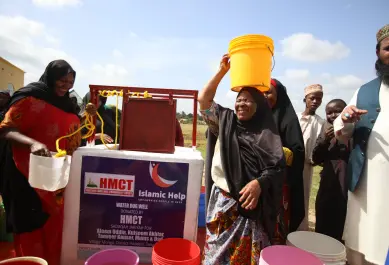
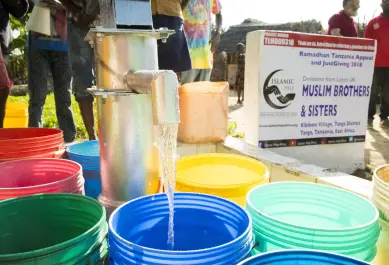
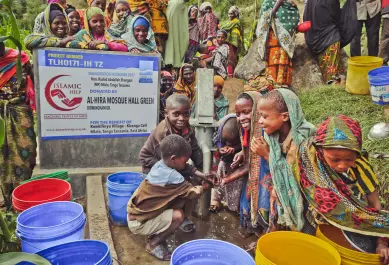
Many people choose to give Sadaqah through trusted Muslim charities, ensuring their donations reach those most in need.

Conclusion

There is no single correct answer for how much Sadaqah to give. Islam encourages believers to give what they can, when they can, with sincerity and balance.

Whether small or large, regular or occasional, every act of charity matters. By giving with the right intention and within your means, Sadaqah becomes a source of blessing, growth, and reward in both this life and the next.

FAQs:

  • What is the difference between Sadaqah and Zakat?
    Zakat is an obligatory charity and one of the pillars of Islam, while Sadaqah is voluntary. Zakat follows fixed rules and calculations, whereas Sadaqah can be given at any time, in any amount, and in many forms, including acts of kindness and service.
  • How much Sadaqah should I give?
    There is no fixed amount for Sadaqah in Islam. You should give according to your ability and circumstances. Even a small amount given sincerely counts as charity, while larger amounts may be given when finances allow without causing hardship.
  • Is there a minimum amount for Sadaqah?
    No. Islam sets no minimum amount for Sadaqah. Any sincere donation, no matter how small, is accepted. The Prophet ﷺ taught that even small acts of charity carry reward when done for the sake of Allah.
  • Is it better to give small amounts regularly or large amounts occasionally?
    Both approaches are acceptable. Small, regular donations build consistency, while larger occasional donations can meet urgent needs. Islam values consistency but also encourages generosity whenever one is able.
  • Can I give Sadaqah if I am struggling financially?
    Sadaqah is not obligatory, so you are not required to give if it causes hardship. If you choose to give, even a small amount or a non-financial act of kindness counts. Islam prioritises basic needs and responsibilities first.
  • Does giving more Sadaqah bring more reward?
    Greater generosity can bring greater reward when given sincerely and within one’s means. A small donation given with sacrifice may earn more reward than a large amount given easily. Islam emphasises intention and sincerity over size alone.
  • Can Sadaqah be given regularly?
    Yes. Regular Sadaqah is encouraged, even if the amount is small. Consistent giving helps build generosity and provides ongoing support to people in need.
  • What types of Sadaqah can I give?
    Sadaqah can include financial donations, helping others, volunteering time, offering advice, showing kindness, or removing harm. Any good deed done, reminding oneself it is for Allah’s sake, counts as Sadaqah.

updates that matter

Empower my Inbox

Volunteer

Vivamus lacinia lacus vel neque egestas, vitae volutpat purus dapibus. Nullam nec ultricies erat. Etiam ac urna metus.

    Updates that matter

    Join our mailing list for events, urgent appeals, and project updates from the communities you help empower.

      We use cookies to make your visit even better

      They help us understand how our website is used so we can improve your experience and share the stories and projects you care about most. All data is anonymous, and your privacy matters to us.
      We use cookies to make your visit even better